Black Cherry
Prunus Serotina
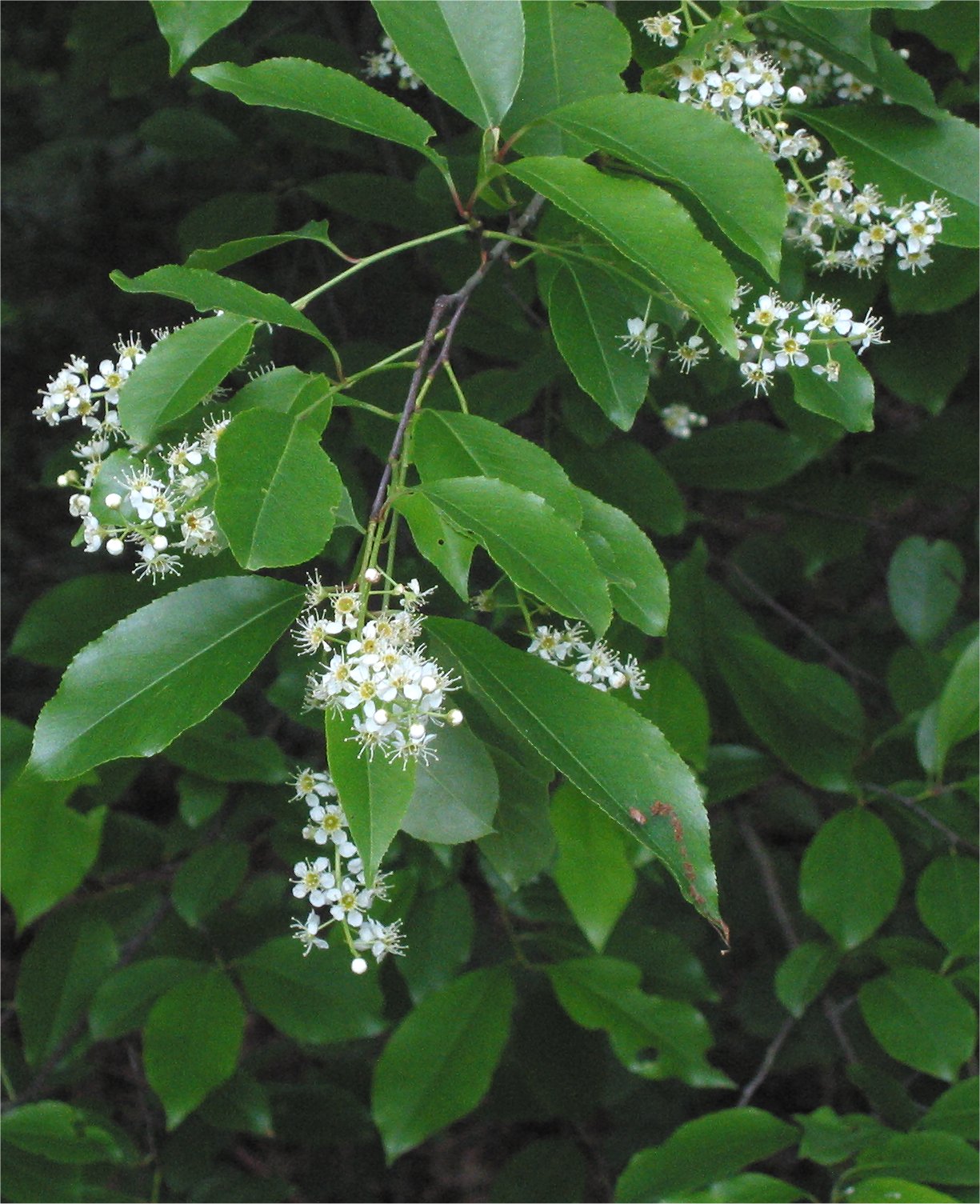
A robust, native deciduous tree, the Black Cherry offers year-round interest with its handsome bark, spring flowers, and edible summer fruits.
Size
Installation
About this plant
The Black Cherry (Prunus serotina) is a fast-growing, long-lived native tree prized for its ornamental qualities and ecological benefits. Its glossy, dark green leaves provide a lush canopy, turning vibrant shades of yellow and red in the autumn, adding striking color to any landscape. The tree's distinctive bark, which starts out smooth and reddish-brown, develops into a rough, scaly texture reminiscent of burnt potato chips, providing unique visual interest even in winter. In spring, the Black Cherry produces abundant clusters of fragrant white flowers, attracting a variety of pollinators. These blossoms give way to drooping clusters of edible, dark purple to black cherries in late summer, a favorite food source for birds and other wildlife. While the fruit is a bit tart for fresh eating, it's excellent for jams, jellies, and desserts. Ideal for naturalized areas, woodland gardens, or as an attractive shade tree, the Black Cherry adapts to a range of soil conditions and is relatively low-maintenance once established. Its strong, straight trunk and broad, rounded crown create an impressive presence in the landscape.
Care & maintenance
Easily grown in average, medium moisture, well-drained soils. Prefers full sun but tolerates partial shade. Best growth and fruit production occur in full sun. Prune in late winter or early spring to remove dead or diseased branches and to maintain desired shape. Protect young trees from deer browsing.
Quick facts
- Type
- tree
- Mature height
- 50-80 ft
- Mature width
- 25-50 ft
- Sun
- Full Sun to Partial Shade
- Water
- Medium
- Growth rate
- Fast